
By Segun Olape
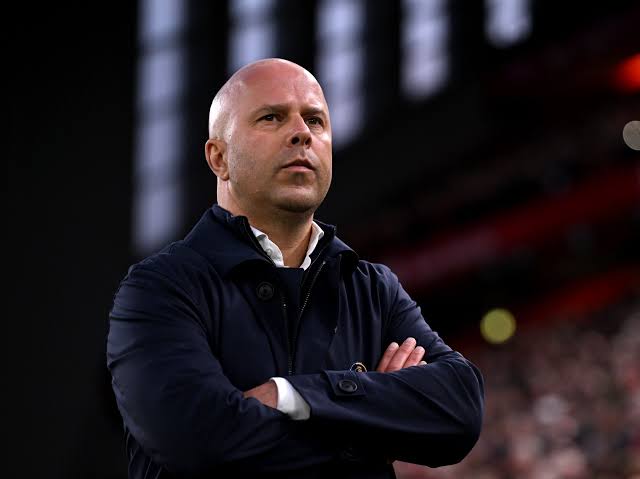
When Arne Slot joined Liverpool, he brought a fresh approach.
Surprisingly, Liverpool did not look for a like-for-like replacement when Jurgen Klopp left and Liverpool began to win games under Slot, this felt refreshing for fans and players alike.
The Dutch manager’s more controlled approach was a clear change to Klopp’s ‘heavy-metal’ style of play, instead opting for slower possession and less intense pressure off the ball.
Part of Slot’s appeal to Liverpool’s decision makers during their manager search could have been the fact he ranked second for keeping his players fit.
Interestingly, it was only Ruben Amorim’s Sporting that ranked higher.
Both Slot’s tactics and the training methods he used would have contributed to this and Liverpool’s ability to keep players sharp and fit throughout last season was a major reason behind them winning the league.
Sessions under Slot are not as intense as they were under Klopp, tailored instead to specific players and the demands of Liverpool’s schedule.
This season however, Liverpool have not had the same luck with injuries as they did last season. They have also consistently struggled to see games out.
After a 1-1 draw against Burnley in January, Virgil van Dijk said: “After 60 minutes, we started to become sloppy and it’s not the first time. We have to address that.”
As positive as Slot’s changes were in his first season, there is a possibility that they were so effective because they were stacked upon the physical base that Klopp had built through an approach that might be considered too strenuous on its own.
For a team to succeed, tactics and the skillset of the squad have to be considered together.
Simply put, a team’s style has to suit their players.
Liverpool’s squad overhaul in the summer should have resulted in an improvement on the success of last season.
In actuality, it appears now that some of the players Liverpool lost had the necessary traits needed to elevate Slot’s ideas.
Picking specific moments to press is not inherently a bad tactic but it requires aggression and co-ordination throughout the squad.
The tragic loss of Diogo Jota will have undoubtedly impacted Liverpool’s ability to complete an optimal pre-season.
Alongside the sales of Darwin Nunez and Luis Diaz, Liverpool are without three attackers who could press well, often winning the ball high, even if they did not engage as often under Slot, as they did under Klopp.
This season Liverpool’s forward line has not been able to minimise the potential flaws of Slot’s press – often slower to apply pressure, failing to cut out easy passing lanes and not back-pressing to tackle opposition midfielders.
Florian Wirtz’s 86.7 pressures per 90 minutes this season are similar the numbers Jota (104.1) and Nunez (93.6) boasted last season but the likes of Hugo Ekitike (73.3), Alexander Isak (70.0) and an ageing Mohamed Salah are different types of players.
This more cautious approach is not just seen in Liverpool’s out-of-possession game this season either. The same ideas pop up in their on-the-ball approach.
In Klopp’s title-winning season of 2019-20, the number of possessions won and lost combined per game averaged at 212.2. For Liverpool this season, this number is down to 169.1.
In essence, Liverpool lose the ball less often when in possession and win the ball back less often when out of possession. This suggests they are taking fewer risks in both how they press and in how they look to create chances.
This lack of risk is notable in the build-up with moves often circulating the width of the defence, into the midfield and back again.
When the opportunity to play through the lines opens up, players have shown a reluctance to do so. In August 2024, Slot spoke about his style of play in comparison to his predecessor, noting:
“The slight difference is that after we win the ball I like to go forward as Jurgen liked it but I sometimes like it when players try to keep the ball and not play the difficult ball.”
That hints at the problems this season being in part tactical but as Jota, Nunez and Diaz did in their pressing, Trent Alexander-Arnold mitigated these flaws in the build-up through his individual skill-set.
Alexander-Arnold’s quality in build-up often went unnoticed but the Englishman was able to play forward into midfield, with either foot, under pressure.
His willingness to play long, with an accuracy and vision few could match, helped Liverpool get up the pitch quickly – allowing the likes of Salah to attack in space, rather than against compact low-blocks.
“I think this season the league has changed, we see so many more low blocks than I saw last season,” was one of Slot’s many quotes around defences causing his side problems this season.
While defensive trends have changed, Liverpool’s slow and safe passing on the ball is giving teams time to set up in their compact defensive shapes.